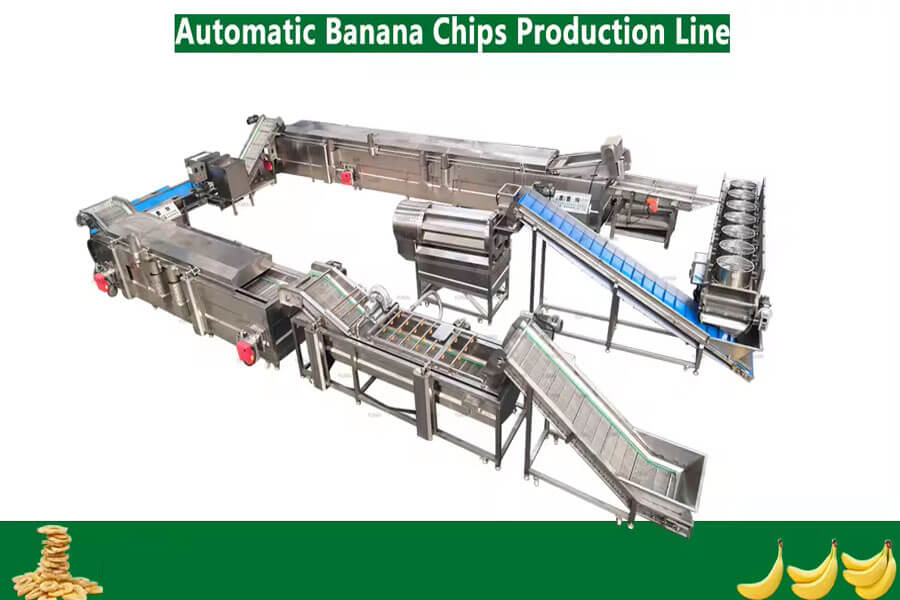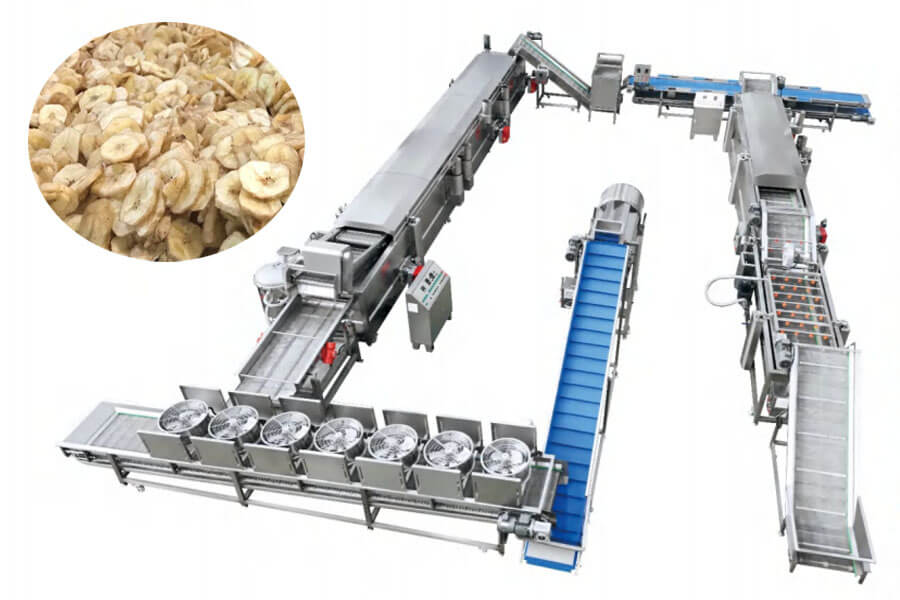
Fully Automatic Continuous Banana & Plantain Chips Production Line
Industrial Continuous Plantain Banana Chips Plant Solutions 100–500 kg/h Output Capacity
Our fully automatic continuous banana and plantain chips production lines are designed for large-scale snack manufacturers seeking stable, high-throughput production with reduced manual handling. Available in output capacities from 100 kg/h to 500 kg/h, each banana chips line is configured according to the required output, product style, raw material condition, factory utilities, heating method, automation requirements, and packaging format. Typical process flow is:
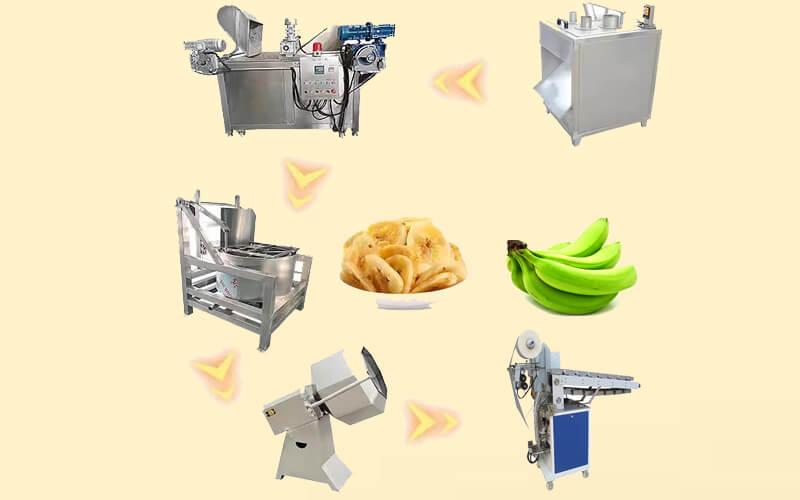
Raw material receiving → peeling → slicing → optional pretreatment → continuous frying → de-oiling → seasoning → cooling → weighing → packaging
The final process layout may vary depending on your product recipe and project scope.

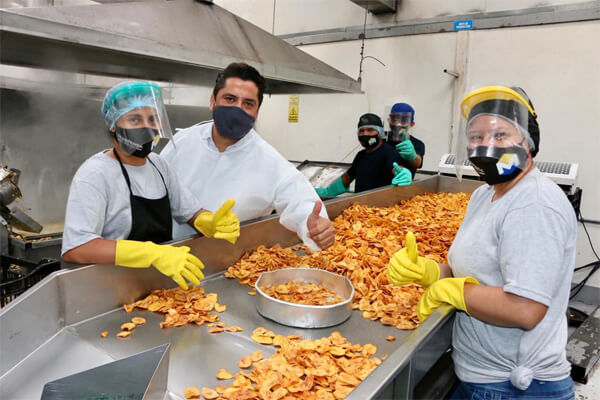
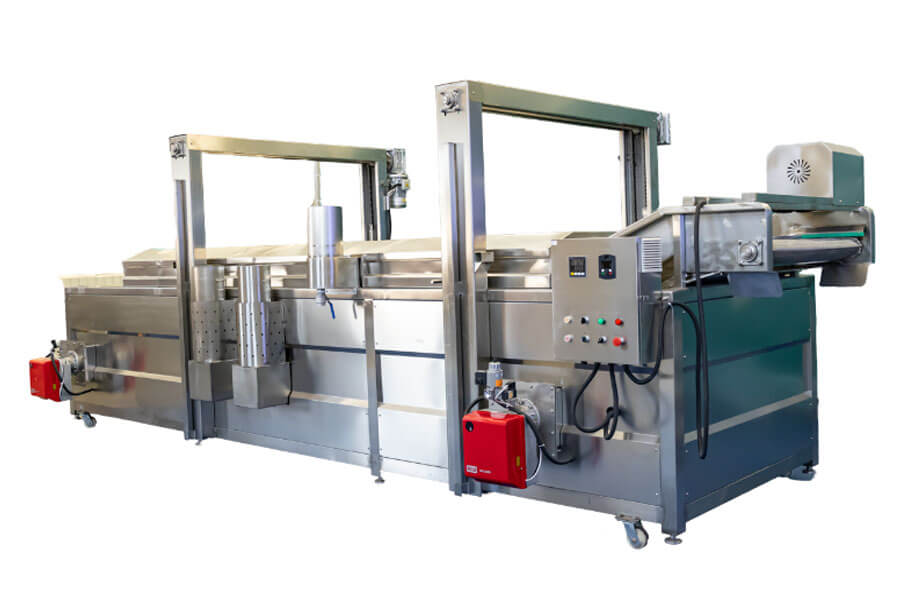
The continuous banana chips line enables sliced banana or plantain to move through the frying, de-oiling, seasoning, cooling, and packaging stages in a controlled, continuous workflow. Compared with a batch banana chips line, a continuous line is better suited to manufacturers requiring higher output, more consistent production rhythm, and longer operating hours. Available heating options are Electric heating, Gas heating, LPG heating, and Indirect thermal oil heating.
Continuous Banana/Plantain Chips Line at a Glance

- Output capacity: 100–500 kg/h, depending on model and configuration
- Processing method: Continuous slicing, frying, de-oiling, seasoning, cooling, and packaging
- Main products: Banana chips, plantain chips
- Heating options: Electric, gas, LPG, indirect thermal oil heating
- Automation level: Fully automatic continuous processing system
- Suitable users: Medium and large snack factories, industrial food processors, export-oriented snack brands
- Customizable: Design based on capacity, product recipe, plant layout, utilities, and automation scope
Continuous Banana/Plantain Chips Production Line Videos
A New Automatic Banana Chips Production Line Is Ready For Delivery
Complete Automatic Banana Chips Production Line Working Video Show
Our Factory Video Tour Complete Fried Snack Production Solutions
Automatic Continuous Banana Plantain Chips Production Line
Request a Plantain Banana Chips Plant Solution
To recommend the right model and configuration, our team will evaluate your required capacity, raw material, heating source, layout, and automation objectives.
Heating Options for Continuous Banana Chips Fryers
Our continuous banana and plantain chips frying lines can be configured with the heating method that best fits local energy infrastructure and operating requirements.
1. Electric Heating. Electric heating uses electricity to heat the frying system. Suitable for factories with stable industrial electrical supply and favorable electricity pricing.
2. Gas Heating. Gas heating is suitable for facilities with a reliable, compatible gas supply. It is a commercial choice for large banana chips lines.
3. LPG Heating. LPG heating is a gas-fired option suitable for locations without pipeline natural gas or factories using LPG tanks or centralized LPG supply systems.
4. Indirect Thermal Oil Heating. Indirect thermal oil heating uses a thermal oil system to transfer heat to the fryer indirectly. It is suitable for larger-capacity continuous frying projects and centralized factory heating systems.
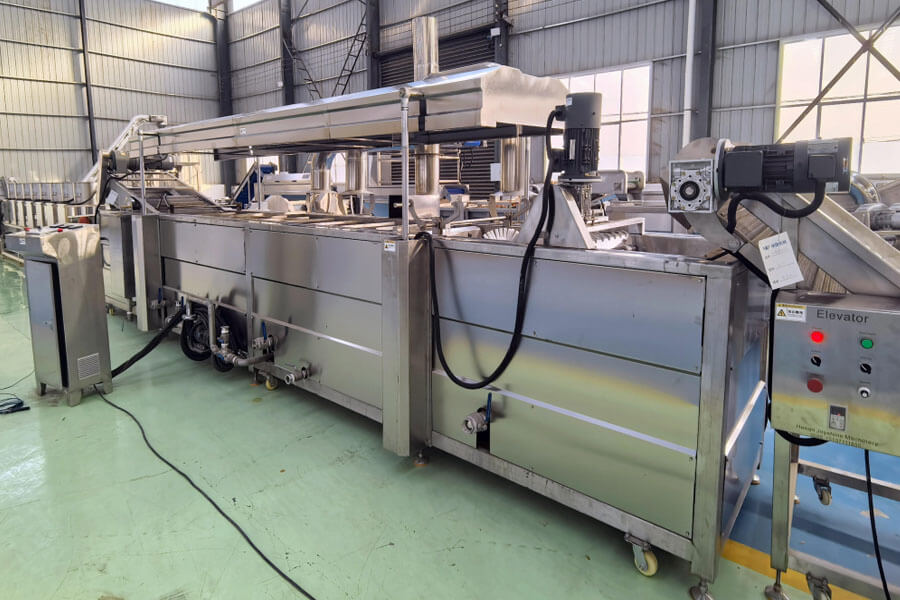
Electric Heating Continuous Frying Machine

Gas Heating Continuous Frying Machine

Indirect Thermal Oil Heating Continuous Frying System
Why Choose a Continuous Banana Plantain Chips Line?
- Higher Production Capacity. Reduces labor costs and allows for large-scale banana chips production. With capacities from 100 kg/h to 500 kg/h, continuous banana plantain chips lines support larger daily production volumes and can be configured for planned multi-shift operation.
- Stable Product Flow. A continuous banana chips line is designed to maintain an organized material flow from frying through packaging. This helps reduce interruptions caused by manual product transfer between individual machines.
- Reduced Manual Handling. Automated conveying and integrated processing stages reduce the need for workers to manually lift baskets or transfer hot fried chips between the fryer, de-oiling machine, seasoning equipment, and cooling section.
- Hygiene, Safety, Energy Saving. The modern banana chips machines are made of food-grade stainless steel, designed to meet stringent food safety standards. Equipped with advanced and efficient heating systems, avoiding energy waste.
- More Consistent Process Control. Continuous systems allow manufacturers to establish and monitor process settings such as slice thickness, Product feed rate, Frying temperature, Frying residence time, Frying oil level, De-oiling conditions, Seasoning dosage, Cooling time, and packaging weight. Consistent control supports more uniform product quality in size, texture, and flavor.

Request a Plantain Banana Chips Plant Solution
To recommend the right model and configuration, our team will evaluate your required capacity, raw material, heating source, layout, and automation objectives.
Continuous Banana Plantain Chips Production Line Workflow
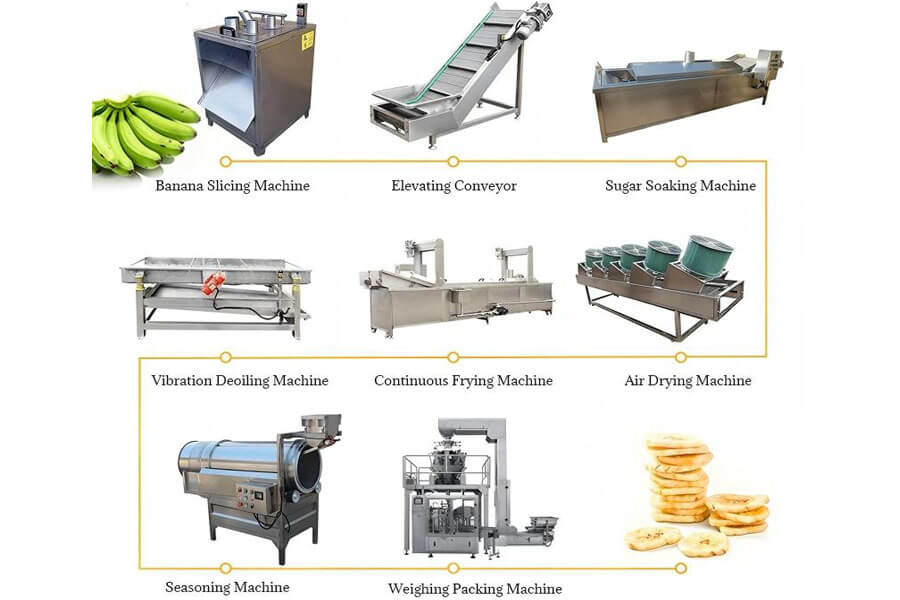
An automatic banana chips production line is a highly efficient system that involves a series of machines designed to automate the process of making banana chips from peeling to packaging. These machines are designed to work in sequence, ensuring a streamlined and efficient production process.
1. raw material –>2. peeling –> 3. slicing –>4. frying –> 5. deoiling –> 6. seasoning –> 7.selecting –>8. weighing and packing
1. Raw Material Receiving and Sorting
Bananas or plantains are received, inspected, and sorted before processing. Incoming banana/plantain quality affects slicing performance, finished color, oil consumption, breakage rate, and product yield. For savory banana and plantain chips, green fruit is commonly used because of its firmer texture and relatively high starch content.
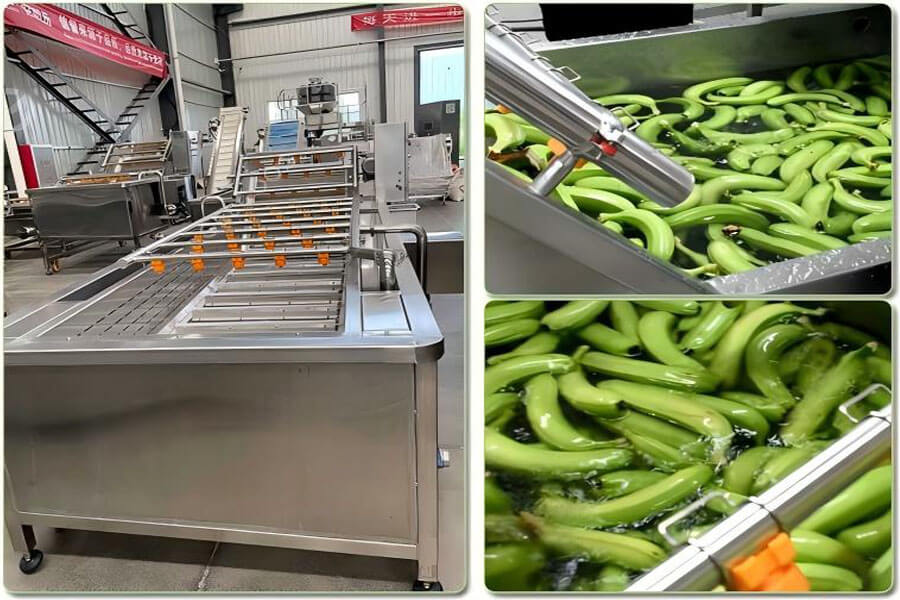
2. Banana Washing
The raw material may be washed to remove soil, dust, field debris, and external contamination. Depending on the project scope, the washing section may include Bubble washing, Spray washing, Conveyor washing, Manual washing and inspection stations.
3. Peeling and Preparation
Banana and plantain peeling is often performed manually because fruit shape, peel thickness, maturity, and variety can vary significantly. A preparation area may include Stainless-steel peeling tables, Inspection conveyors, Collection bins, Waste peel handling arrangements, and Material transfer conveyors.
4. Banana Chips Slicing
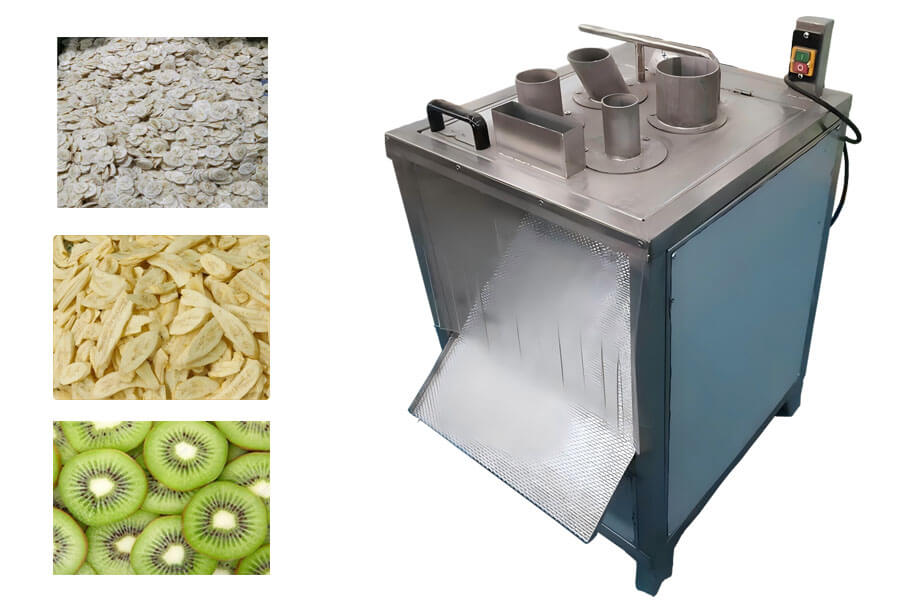
Peeled banana or plantain is fed into a banana slicer that produces slices in the required shape and thickness. The slicing machine is adjustable to make different chip styles, such as round, diagonal, long, smooth, or crinkle-cut slices. Uniform slicing is essential because it affects Frying time, Crispness, Product color, Moisture removal, Product appearance, and Seasoning coverage.
5. Optional Pretreatment
Depending on the recipe, sliced banana/plantain chips may undergo rinsing, soaking, salting, anti-browning treatment, or other pre-frying preparation steps. Possible objectives include Surface starch reduction, Color management, Texture adjustment, Flavor preparation, Product separation, and Recipe-specific treatment.
6. Continuous Banana Chips Frying
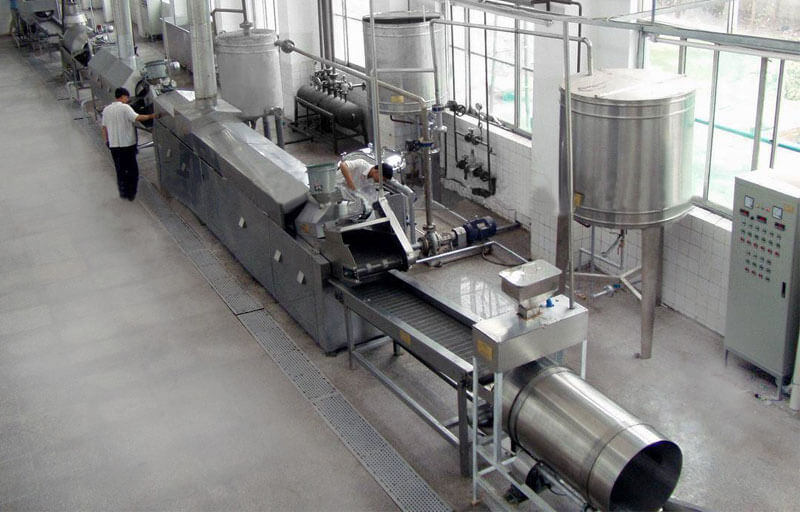
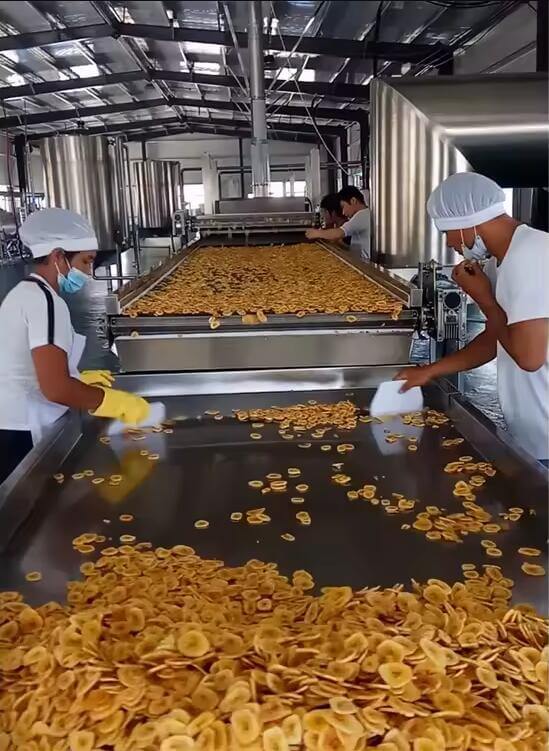
The sliced banana/plantain chips enter the continuous frying machine, where they are fried in edible oil under controlled conditions. The fryer is configured to provide a continuous processing environment with controlled product movement and frying time. During frying, water is removed from the banana or plantain slices, creating the desired crispness, color, and fried-snack texture. We recommend adopting twice-frying technology to enhance the quality and appeal of banana chips.
7. Continuous Banana Chips De-Oiling
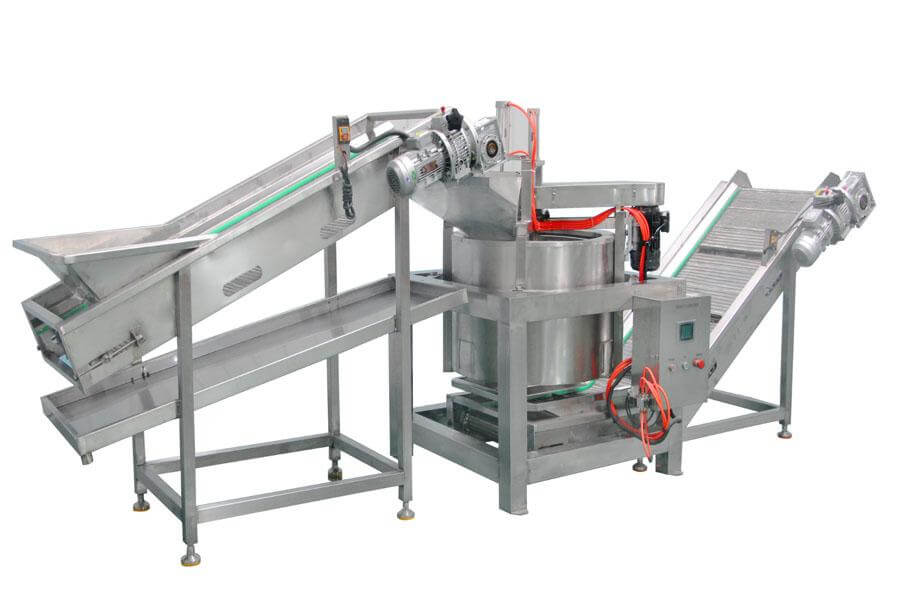
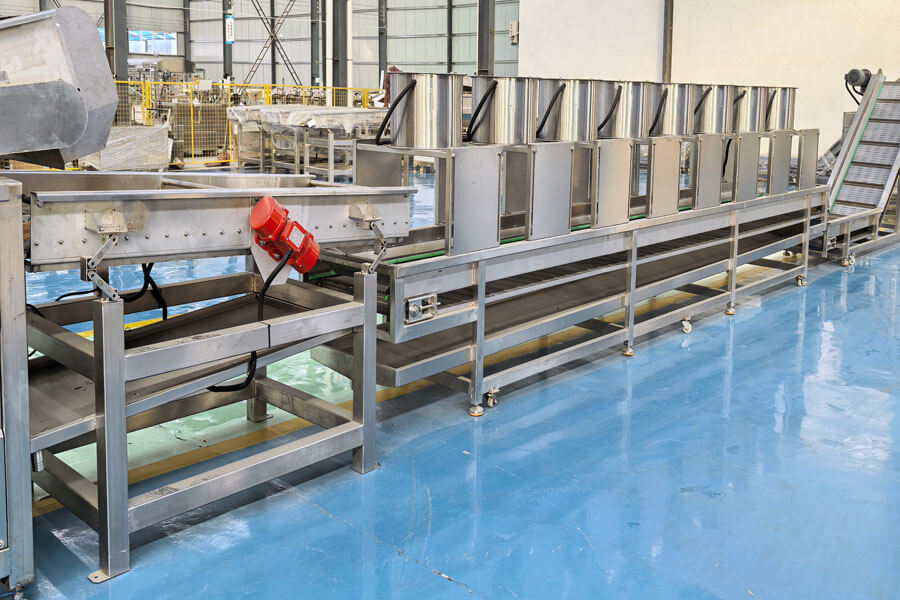
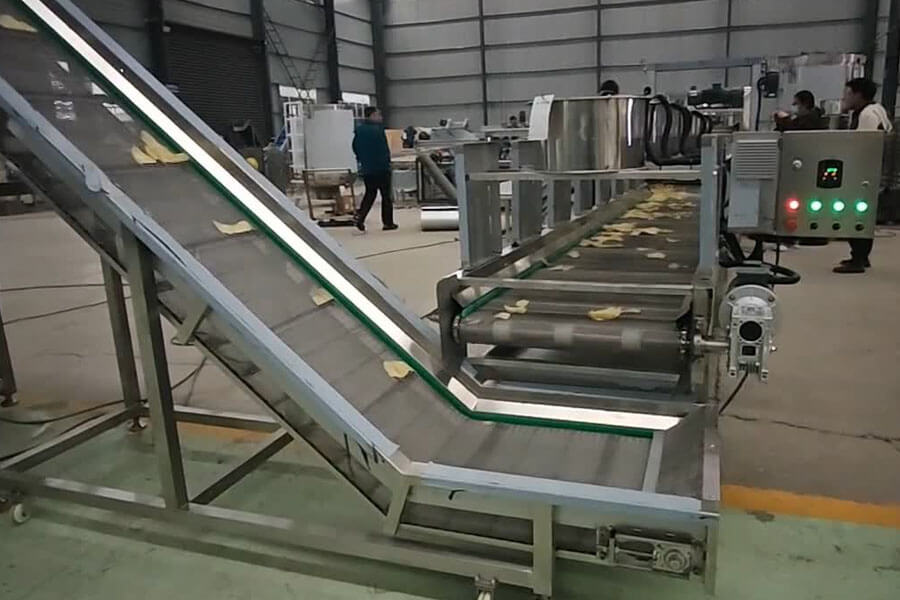
After frying, chips pass through a de-oiling stage to reduce excess surface oil before seasoning and packaging. De-oiling primarily removes excess surface oil. Final oil content also depends on raw material, slice thickness, frying conditions, moisture removal, and product formulation. We configure a Vibration De-oiling Machine followed by an Air Blow Cooling & De-oiling Conveyor for a continuous plantain banana chips production line.

8. Banana Chips Seasoning
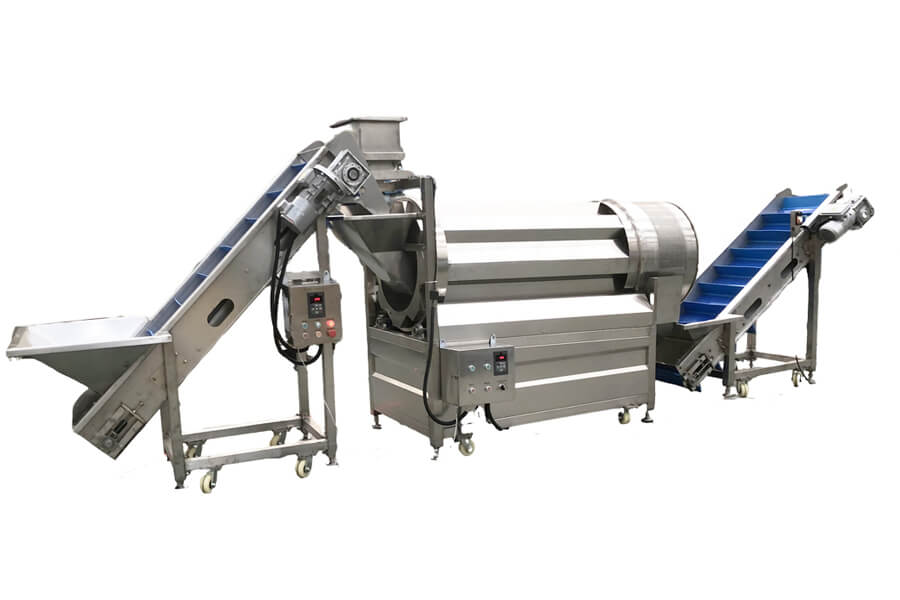
After de-oiling, banana chips can be continuously transferred to a seasoning system to evenly coat the banana chips with desired flavors and seasonings. A rotating drum continuous chips seasoning machine is adopted. Depending on the product, the system may apply Spice blends, Chili seasoning, Barbecue flavor, Cheese flavor, Sugar blends, Sweet flavor powders, and other dry seasonings. Seasoning performance depends on chip temperature, surface oil level, powder properties, dosage control, seasoning drum design, and product flow.
9. Banana Chips Cooling
Banana Chips should be cooled before packaging to minimize the risk of condensation within the package. This step is crucial to maintain the texture and shelf life of the banana chips. The cooling section is designed according to the line capacity, ambient environment, final package format, and product temperature at discharge.
10. Weighing and Packaging
After cooling, finished banana or plantain chips can be sent to a packaging system. The automatic banana chips packaging machine can automatically weigh, fill, print, and seal the banana chips into bags. Includes vacuum packing and nitrogen filling to extend shelf life. The automatic packaging machine can handle various packaging formats and sizes, ensuring the banana chips are securely sealed and ready for distribution.

Optional Equipment and System Upgrades
The following components may be included according to your process and automation requirements:
- Automatic raw material feeding system
- Banana washing system
- Pre-frying treatment tanks
- Oil filtration equipment
- Oil storage tanks
- Oil circulation system
- Oil replenishment system
- Continuous seasoning equipment
- Flavor powder dosing system
- Cooling conveyor
- Nitrogen-flush packaging system
- Multihead weighing system
- Metal detection
- Date coding
- Central Control System and production data monitoring
Start Your Banana Chips Plant |
Banana chips are a popular snack enjoyed globally for their sweet and crunchy texture. An automatic frying banana chips production line is a valuable investment for businesses looking to produce high-quality banana chips efficiently. By automating the peeling, slicing, frying, de-oiling, seasoning, cooling, and packaging processes, we can ensure consistent product quality, reduce labor costs, and increase production capacity. For more information on banana chips machines and turnkey banana chips plant solutions, contact us now
Tell us your banana chips production requirement

150kg/hr Automatic Banana Chips Line Machine List
Technical Data of 150kg/hr Banana Chips Production Line
Input capacity: 500kg/h(peeled)
Output capacity: 150kg/h
| No. | Product name | Power | Dimension |
| 1 | Banana slicing machine (2 sets) |
1.50 kW | 700*700*900mm |
| 2 | Elevator feeding machine | 2.25 kW | 2000*1000*1600mm |
| 3 | Chips frying machine (external gas heating) |
5.94 kW | 6000*1200*2200mm |
| 4 | Oil storage tank | 1.50 kw | 1200*1200*1800mm |
| 5 | Oil adding tank | 6.00 kw | 1380*600*1580mm |
| 6 | Vacuum oil filter | 1.50 kw | 600*600*1000mm |
| 7 | Vibration de-oiling machine |
0.36 kw | 1800*1000*1300mm |
| 8 | Air blowing de-oiling machine |
6.00 kw | 4000*1200*1400mm |
| 9 | Elevator feeding machine | 0.75 kw | 2000*800*2200mm |
| 10 | Seasoning machine | 1.50 kw | 2000*900*1500mm |
| 11 | Elevator feeding machine | 0.55 kw | 1500*800*950mm |
| 12 | Automatic weighing and packing machine (420 with 10 heads weigher) |
6.50 kw | 4200*2500*3900mm |
| 13 | Nitrogen making machine | 0.55 kw | 1100*750*1270mm |
| 14 | Air compressor system | 7.50kw | 900*650*760mm |
Technical Support For Your Banana Chips Plant Project
Assessment: Evaluate banana chips production requirements, including the desired capacity, available space, and budget.
Design and Customization: Customize the banana chips line layout and banana chips machine specifications.
Installation: Set up and integrate the banana chips machines into the production facility.
Training: Provide training for operators on machine usage and maintenance to ensure smooth and efficient production.
Testing: Run tests to ensure the banana chips production line operates smoothly and meets quality standards.
Just tell us your banana chips production capacity requirement. We will send you a free quote and help you start your banana chips plant.
We Recommend The Banana Chips Twice Frying Technology
Twice frying is a common technique in snack production to enhance the quality and appeal of banana chips, making them a preferred choice for both consumers and producers.
Enhanced Crispiness: The initial frying removes moisture, and the second frying crisps up the chips, resulting in a crunchier texture.
Uniform Cooking: Twice frying ensures the banana chips are evenly cooked, avoiding any soggy or undercooked spots.
Improved Flavor: The double frying process can intensify the flavor, giving the banana chips a richer taste.
Better Oil Drainage: The second frying helps in better oil drainage, making the banana chips less greasy and more enjoyable.
Improve Shelf Life: Reduces residual moisture, extending shelf life.
Banana Chips Twice Frying Process
First Frying: Banana slices are fried at a lower temperature to cook through and remove moisture.
Cooling: Banana Chips are allowed to cool, enabling further moisture evaporation.
Second Frying: Banana Chips are fried at a higher temperature to achieve a golden-brown color and crispy texture.
FAQs on Plantain/Banana Chips Production Lines